10 Reasons Your Sales Pipeline Isn’t Predictable(And How to Build a Scalable System)
It all begins with a vision. You started your business because you saw a gap, a need, or a better way to do things. You worked hard, you hustled, and the revenue followed. But then, something shifted. The growth that used to feel like a natural consequence of your effort started to feel... lumpy. One month is a celebration; the next is a search for answers.
Maybe you’ve sat at your desk on a Sunday evening, looking at a spreadsheet and wondering why three "sure things" suddenly stalled. Maybe you’ve felt that tightening in your chest when you realize you can’t accurately tell your board: or even yourself: what your revenue will look like ninety days from now. Maybe you’ve started to suspect that your sales team is working hard, but they’re working without a map.
Don’t worry about the "how" just yet. The fact that you’re noticing the friction means you’re ready for the evolution. It’s time to move from founder-led grit to a scalable revenue system that doesn't rely on your personal heroics.
The Predictability Gap

You aren't alone in this. In fact, roughly 63% of sales managers report they cannot reliably use their pipeline to predict if they will hit their targets. It’s a staggering number that represents a lot of sleepless nights for founders.
When your pipeline isn’t predictable, your business isn't truly scalable. You’re hesitant to hire, afraid to invest in new R&D, and stuck in the daily grind of "saving" deals. To fix the system, we first have to understand where the cracks are.
1. The Referral Rollercoaster
Referrals are wonderful, but they are a "lagging" gift. They come when they come. If your entire pipeline is built on word-of-mouth, you’re at the mercy of other people’s timing. A predictable system requires a proactive lead generation engine that you can turn up or down like a thermostat.
2. Inconsistent Lead Quality
Maybe your marketing team is celebrating "record lead volume," but your sales team is complaining that the leads are "trash." If there is no shared definition of an Ideal Customer Profile (ICP), your pipeline gets bloated with "noise" that will never convert, making your forecast look much healthier than it actually is.
3. The "Hero" Culture
In many growing companies, sales happen because of one or two "star" reps: or the founder: who just have "the magic." While impressive, magic doesn't scale. If you can’t document exactly why a deal was won, you can’t repeat it.
4. Lack of CRM Discipline
We have to talk about the CRM. Research shows that a well-implemented CRM can increase revenue by up to 245%, but only if people actually use it. If your reps treat the CRM as an administrative chore rather than a source of truth, your data is a fiction. Garbage in, garbage out.
5. Tracking Tasks, Not Milestones
Many pipelines track your actions: "Sent Proposal," "Conducted Demo." But these don't predict a sale. A predictable pipeline tracks buyer milestones: "Client agreed to the business case," or "Legal review started." If you're tracking your work instead of their progress, your close dates will always slip.
6. Pipeline Leakage
Opportunities don't always die; sometimes they just... evaporate. Without a structured follow-up process, leads fall through the cracks. This "leakage" means you’re spending money to fill a bucket that has holes in the bottom.
7. No Repeatable Sales Process
If three different reps are selling the same product in three different ways, you don't have a sales process. You have a collection of habits. A repeatable process allows you to measure conversion rates at every stage, giving you the power to see a revenue shortfall months before it happens.
8. The "Gut Feel" Forecast
"I think this one will close" is not a strategy. When forecasting is based on optimism rather than data driven probabilities, the results are inevitably disappointing. Applying structured forecasting techniques can improve accuracy by 40% or more.
9. Misaligned Pricing and Discounts
If your team is "wheeling and dealing" to hit end-of-month targets, your margins are unpredictable. Ad-hoc discounting destroys the value of your Customer Capital and makes it impossible to project long-term cash flow.
10. The Founder Bottleneck
If every major deal still needs your "final touch" or approval, you are the bottleneck. A scalable system is one that operates at a high level without your constant intervention. You need to be the architect, not the primary builder.
Building the Machine: From Chaos to Clarity
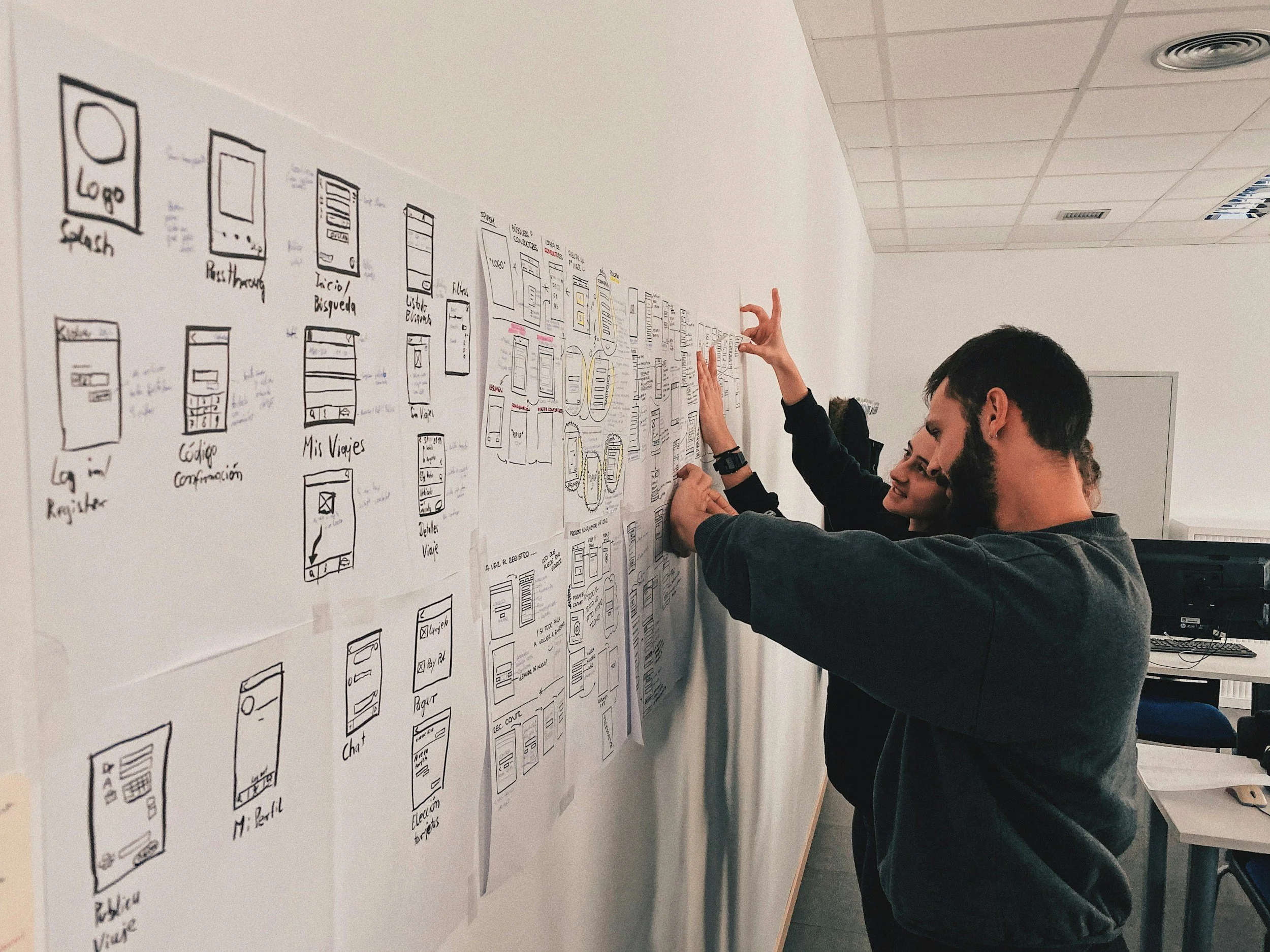
Be clear, be confident and don't overthink it. Fixing these issues isn't about working harder; it’s about building a better machine. You want a revenue system that hums in the background, giving you the freedom to focus on the big-picture vision that started it all.
The transition to a scalable revenue system involves three main pillars:
1. Process: Mapping the buyer’s journey and creating a "Playbook" that ensures every lead is handled with the same high standard.
2. Infrastructure: Setting up your CRM and tech stack to provide real-time visibility into the health of your pipeline.
3. Leadership: Having an experienced hand at the wheel to navigate the complexities of scaling.
The Power of Fractional Sales Leadership
This is often where founders hit a wall. You know you need a seasoned Sales VP or a Chief Revenue Officer (CRO), but a full-time executive hire is a massive commitment. The salary, the equity, the risk: it’s a lot to take on when you’re still in the middle of a growth spurt.
This is where fractional executive leadership changes the game.
A Fractional CRO brings the experience of a Fortune 500 leader to your mid-market business, but only for the hours you actually need. You get the strategy, the systems, and the accountability without the $300k+ overhead. In fact, fractional leadership often provides 60–70% costsavings compared to a full-time hire, allowing you to reinvest that capital into your growth.
A fractional leader doesn't just "give advice." They build the machine. They institutionalize the value so that your sales success is no longer tied to specific individuals, but to the Structural Capital of the company itself.
The Evolution of Your Business The Evolution of Your Business
Scaling is rarely about doing more of the same. It is about evolving into something new. It’s about letting go of the habits that got you here so you can embrace the systems that will take you there.
Maybe the reason your pipeline is unpredictable is simply because it’s outgrown its current container. Maybe it’s time to build a container that can hold the future you’ve been dreaming about.
Don't worry about sounding professional; sound like you. Be authentic, be structured, and be ready for what comes next.
Later will take care of itself. It always does.